
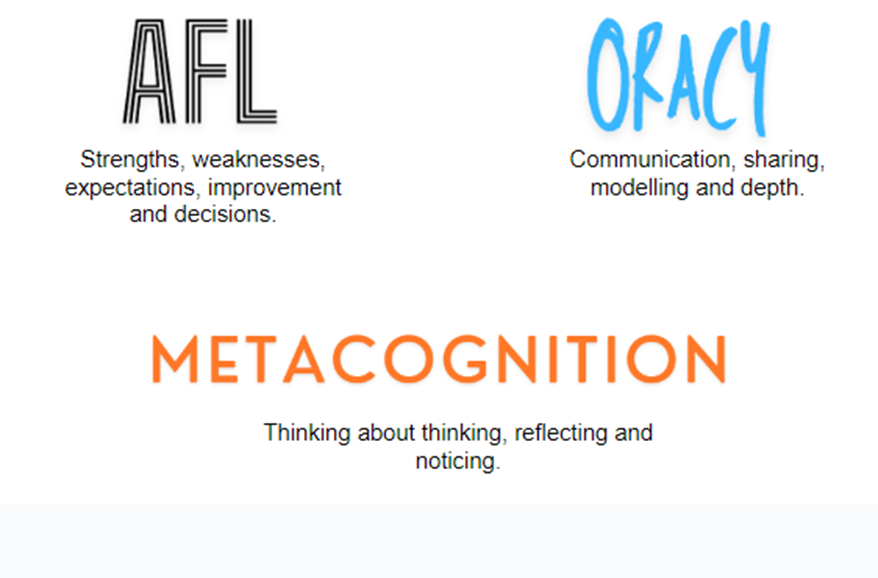
Metacognition can be a minefield for many. Defining metacognition in my professional experience simply refers to that of a child being able to think about thinking. Metacognition is the next step of the puzzle and, if explicitly taught, the impact on students (according to the EEF) can be that of up to an additional 7+ months of progress.
Although a difficult skill to master, it is often paired with the concept of self-regulation. Self-regulation being the ability to manage one’s emotions, behaviour and thoughts in pursuit of one’s long term goals. It involves actually setting those goals, monitoring the progress and adjusting behaviours in order to succeed. This making it crucial in being able to achieve academic success.
Therefore the two skills are consistently connected with the pedagogy of teaching, as the metacognitive focuses in thinking about one’s thinking processes and self regulation involves the managing and directing of the processes towards achieving goals. These two skills enabling learners to plan, monitor, evaluate learning and behaviour which in turn leads to more effective and autonomous learning experiences.
So where does oracy fit in?
Oracy is a skill that students also need scaffolded and to be explicitly taught . Typically students from disadvantage backgrounds are less likely to use the skills of metacognition and oracy, however if embedded and developed within ones teaching practice it can support students self regulation and enable them to think critically about their learning. This is a result of students having to filter information to decide on what it is they want to share and provides the scaffolding and confidence to make meaningful oral contributions in the classroom.
So how does oracy and metacognition connect to AFL?
This then connects to the AFL in the classroom, as students and staff can then identify the strengths and weaknesses within the learning that has taken place. The confidence to make meaningful oral contributions enables you as their teacher to assess the learning that has taken place and any gaps. When sharing their ideas or answers orally students are essentially thinking about their learning, sharing at depth and making decisions on what they have learnt creating a clear connection between the pedagogies of metacognition, oracy and assessment for learning.
Ultimately, these pedagogies create impact in the classroom by enhancing student progress, confidence and resilience.
 Pedagogy in Practice