
What is Cognitive Load?
Cognitive Load Theory developed by John Sweller (1988) discussed the limitations of the working memory and the various factors that can affect cognitive load.
Simplified – Cognitive Load theory explains that our brain can only handle a limited amount of information at once. When we try to process too much information at the same time, we experience cognitive overload—which makes it harder to understand, remember, or learn things.
Think of it like a computer or a phone with too many apps open at once. Just as a computer slows down or crashes when overloaded, our brain struggles to work efficiently when it’s overwhelmed with too much information. To avoid this, it’s important to break down tasks into smaller, manageable parts so the brain can process them effectively.
As teachers we need to be mindful of what we are asking students to do and how we present information – make it too complex and it causes the initial point of learning to become to restricted. Our working memory is fundamental to learning and if we can get students to pay attention to what we are saying and get the to process this information in their working memory we are a small step closer to getting them to learn new things – although it’s not that simple. The working memory has a lot to deal with in order to pay attention in class. Students are not only trying to listen to what you are saying but also trying to pay attention to those around them, the external noises outside the classroom or the gossip they heard at break time about two students. Luckily our brain filters these distractions out into our sensory memory, until that is students decide to pay attention to it.

Cognitive overload could occur at any point within a lesson. We have to ensure that students ‘think’ (using their metacognitive skills) and that as teachers we allow time and space for them to do this without losing the initial learning point. We need to remove unnecessary information, limit the distractions within in the classroom and allow students to focus on the task in hand. We must remember that that our working memory can only hold a very limited amount of information at any given time, approximately three or four items’ worth of information, and that instructional materials must therefore be designed in a way that reflects how much we are able to remember.
In addition to this, we must remember that we cannot control every single distraction within the classroom. For example: the class playing basketball outside your window in their PE lesson, the student who is refusing to go to their lesson or the consistent tapping of a pen. What we can do is embed strategies into our everyday practice to ensure that students have the ability to focus on the task in hand; so that initial learning point is not lost.
Experience is key…
When delivering any session to staff, it is important that they see it through the eyes of a student. To begin the session, I begun with the dual task challenge. Staff were set challenges to complete and with every task their was an additional element added; in addition their was also was the additional pressure of these challenges having time restrictions. Furthermore to add to this pressure and make this as realistic to a classroom as possible, my team and I made sure to create distractions.
Task 1 – On your tables, you have a task sheet (Number 1) with some basic maths questions.
Complete as many of the questions as you can in one minute.
Task 2 – On the next slide, I am going to show you a list of words.
You have 30 seconds to memorise as many of the words as possible.
Task 3 – On your tables, you have a task sheet (Number 2) with some basic maths questions.
Complete as many of the questions as you can and memorise the following list of words on the next slide in one minute.
Once the tasks were completed, an opportunity was given to discuss the following:
- How did it feel trying to do both tasks at once?
- Was one task easier than the other?
- How did your performance change when both tasks were combined?
From the discussion, it was clear that staff had struggled with the final challenge claiming that they had felt stressed, under pressure and had a lack of concentration due to the external factors.
Moving on from this, the discussion then led to what we can do as teaching staff to prevent cognitive load and the focus was narrowed to being able to reduce the extraneous load.
Reducing the extraneous load…
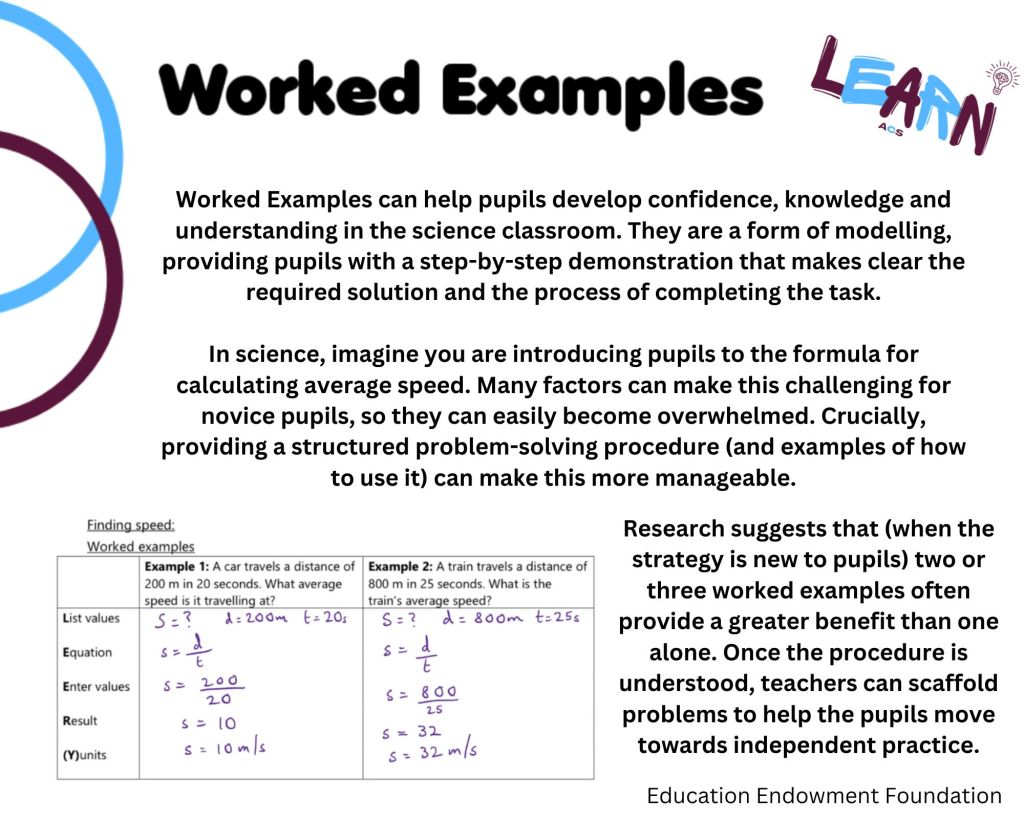
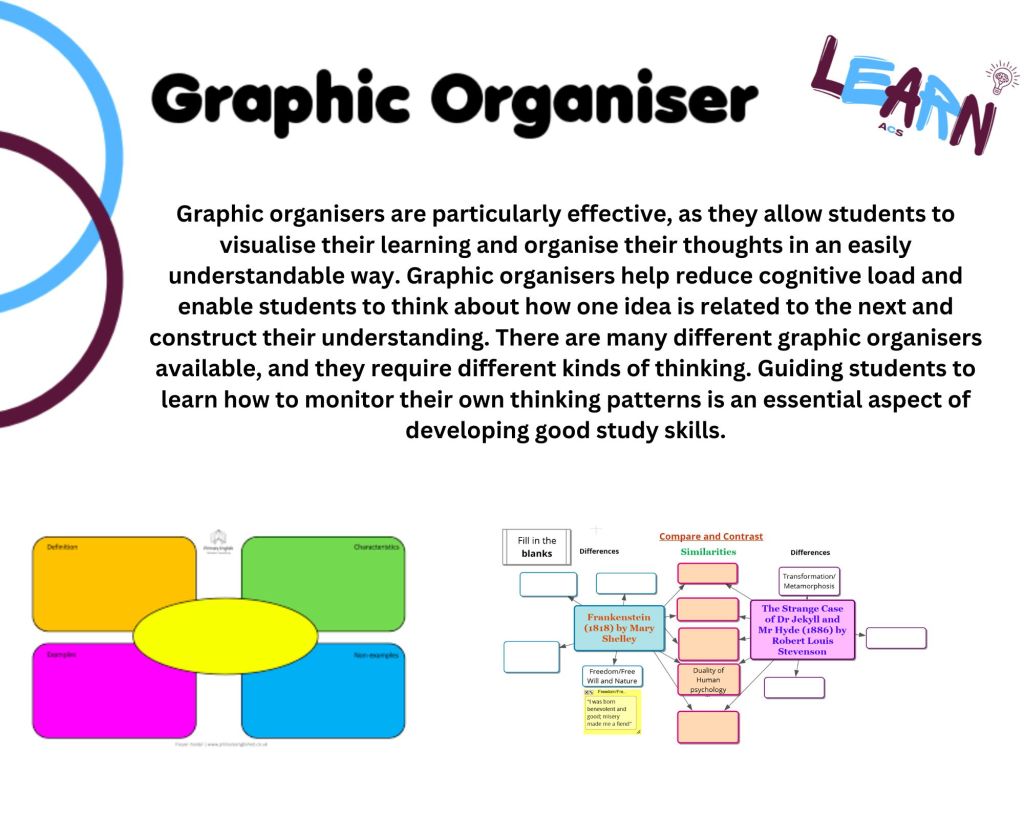
This was only session 1 on Cognitive Load Theory in the classroom, therefore it was key for staff to walk away with strategies that they could implement within their everyday practice. Staff were provided with the following 6 key strategies; these strategies being chosen as starting point for staff.
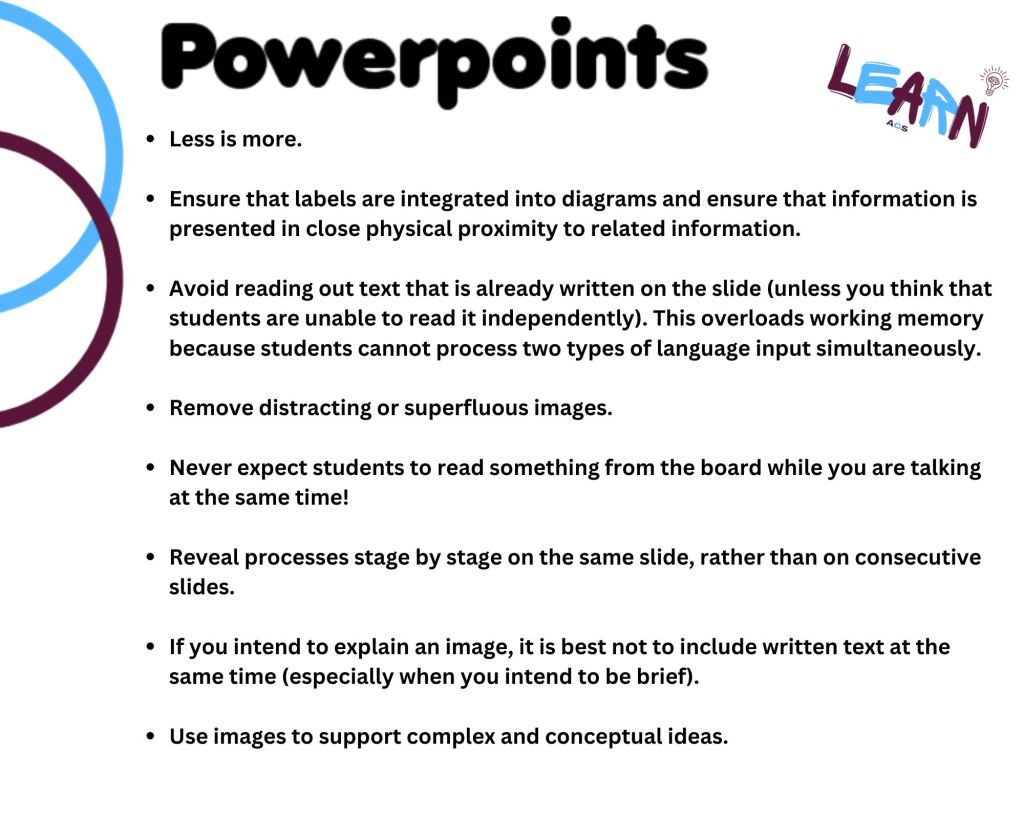
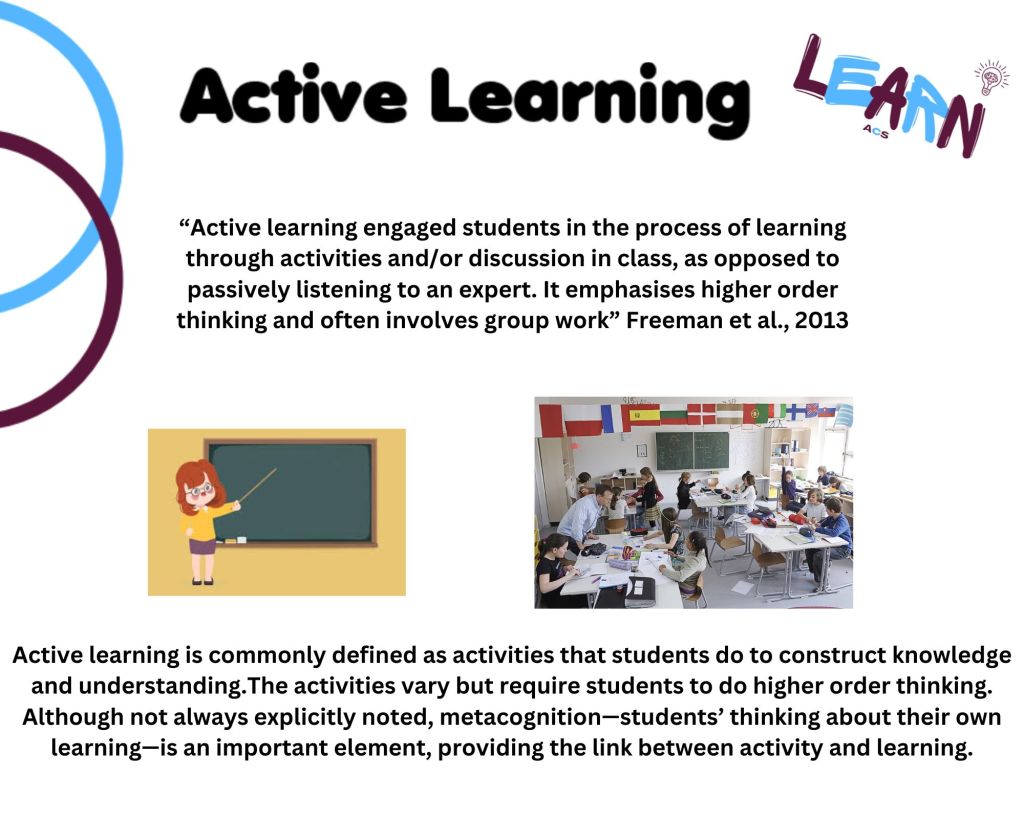
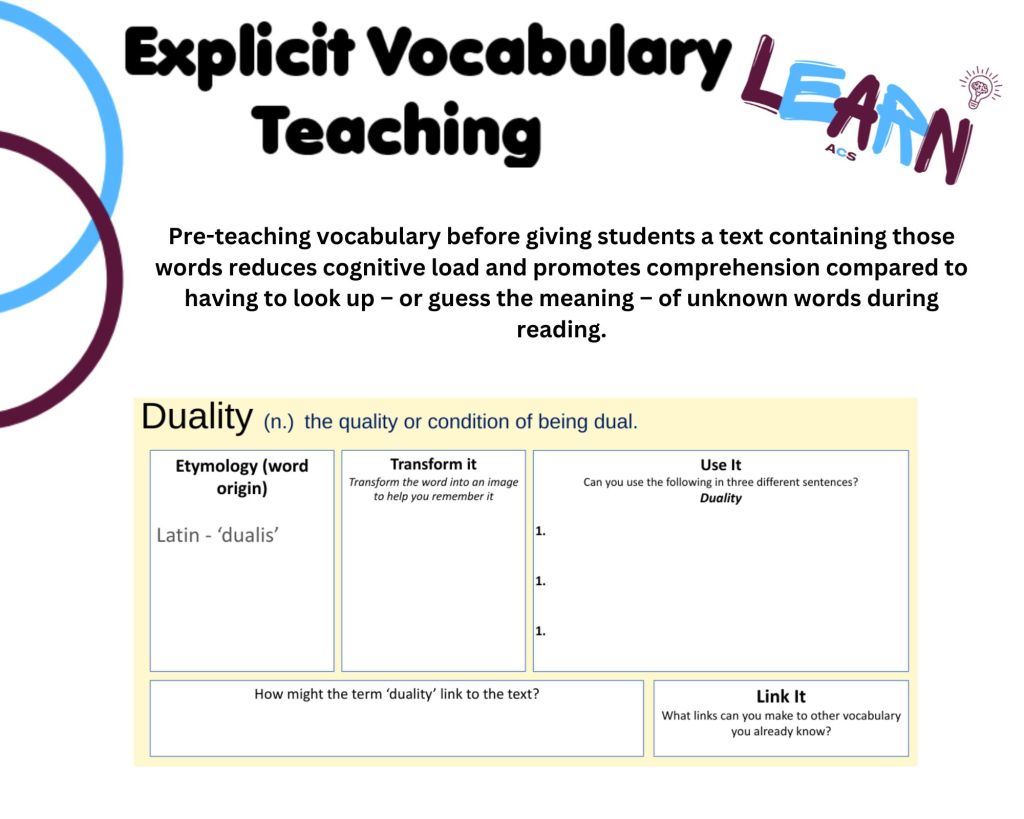
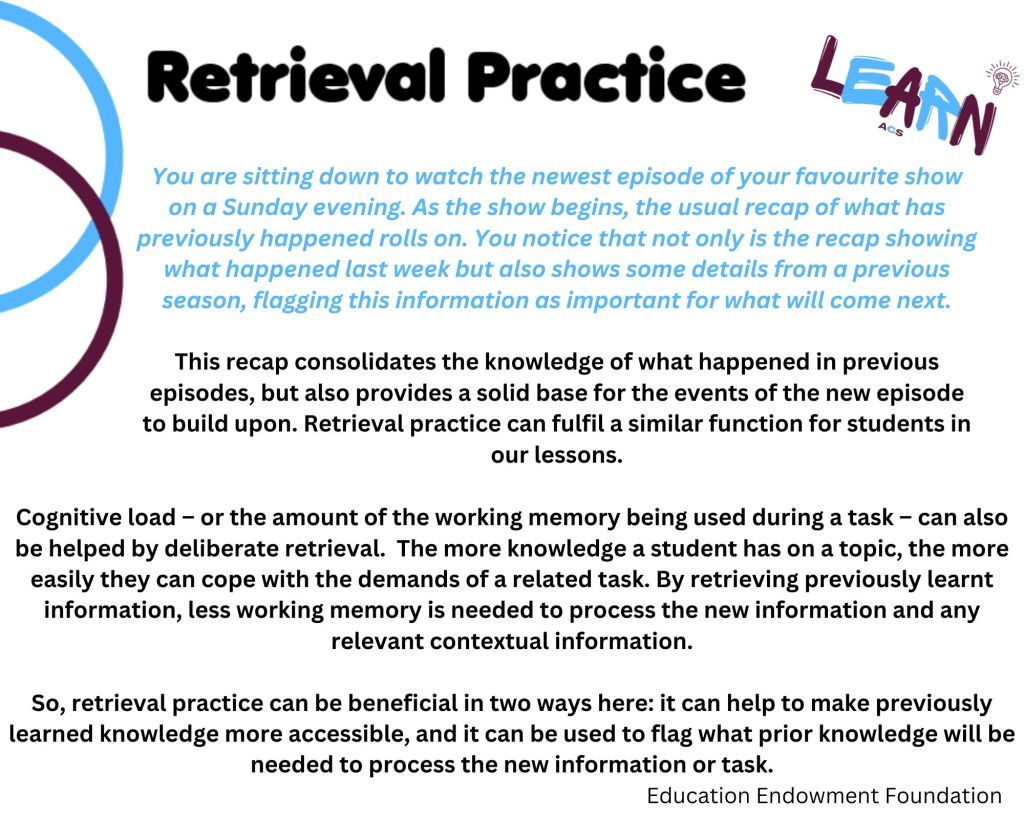
In preparation for session 2, staff have been asked to embed these strategies into their everyday practice and reflect upon their success within the classroom; with specific focus on has it impacted student progress.
 Pedagogy in Practice